

September 3, 2024
Fur-Ever Homes Series: Expert Insights on Tackling Pet Homelessness (Marc Ralsky)
Fur-Ever Homes Series: Expert Insights on Tackling Pet Homelessness (Marc Ralsky)
Marc Ralsky
Chief Executive Officer at The International Partnership for Dogs and advisor to the State of Pet Homelessness Project
Share this story
In the third interview of our ’Fur-Ever Home’ series looking at how we can take action to prevent pet homelessness, we spoke with Marc Ralsky, Chief Executive Officer at The International Partnership for Dogs (IPFD) to hear more about how we can keep dogs in happy homes.
Marc has a long history working with animal-focused NGOs; he was a director at Ontario Society for the Prevention of Cruelty to Animals (SPCA) for nearly six years, before joining IPFD in 2022. Marc and his wife have bred and owned dogs, especially Siberian Huskies and Samoyeds, for 30 years. They currently look after two retired show dogs, Awesome (the all-time winning female Siberian Husky in the USA) and Striker a Samoyed who is a two time Working Group Winner at the iconic Westminster Kennel Club dog show in NYC (he was recently the answer to a question on US gameshow, Jeopardy!)
How does the International Partnership for Dogs work to address pet homelessness?
MR: The IPFD strives to enhance dog health, well-being, and welfare, which includes combatting pet homelessness. We speak to dog owners, kennel clubs, and veterinary organisations across the world, as we believe that communication on a global scale is key to making sure dogs remain in happy, loving homes throughout their lives. That’s why we got involved in Mars’ State of Pet Homelessness Project, as it calls on this level of collaboration across industry and geographies. The information from the report is unique, unbiased, and globally relatable.
One of the key insights that came out of the State of Pet Homelessness Project was that 16% of survey respondents would consider rehoming their dog in the next 12 months. What can be done to bring this number down and ensure that pets are kept in loving homes?
MR: It’s a sad reality that pets can often be rehomed because people didn’t have all the information they needed before taking them on – it’s a big responsibility! Particularly post-COVID, which saw a ‘puppy boom’, owners have come out the other side of the pandemic realising that having a dog isn’t as easy as they originally thought, which is why it is so important for people to research the realities of pet ownership as much as possible before they commit.
I think the most important elements to tackling pet homelessness is ensuring access to the right information and an understanding that a dog is a long-term and significant lifestyle commitment. Far too often, people want instant gratification from their new pets, and unfortunately this isn’t always the reality. Dogs need socialisation, training, stimulation, exercise – and prospective owners need to be aware of this.
We do a lot of work around this education point, helping people engage with the correct content and advice when deciding about potential pet ownership. We recommend a variety of learning materials, like webinars and breeding strategies. There are also some great resources from brands like Royal Canin, who offer Puppy Checklists to empower new owners through information and set them up for success!
How important is considering temperament when choosing a dog and how can the surrendering of dogs because of their behaviour be avoided?
MR: Temperament can be a big factor in people giving up their pets, and this is no doubt a hard decision for owners. A dog is part of the family, so giving them away because you haven’t gelled is a sad situation, but hopefully one that can be avoided with education.
This isn’t just about owners and shelters. Breeders are also a part of the system. A lot of our work at IPFD is focused on information sharing to facilitate responsible, well-informed breeding, which results in puppies with good temperament. On our website, DogWellNet.com, we have a Health Strategies Database for Dogs – a free, searchable resource that includes breed specific health and mentality testing requirements. Equipping breeders with this kind of information encourages responsible breeding and more well-tempered pets. A happy pup in a happy home is always the goal!
Thinking about the bigger picture, how can wider policies help to support pet owners?
MR: Dogs are absolutely part of our wider community – we’re social beings, and the human-canine connection can’t be underestimated! There’s a social aspect that is key to dog retention in homes. More and more, we’re seeing a bigger conversation about pet friendly cities. This can be as small as water dishes at restaurants and park accessibility to the larger advocacy topics like pet-friendly regulations around accommodation. It’s a win-win situation as often our wants and needs for dogs, like green spaces and walking, are also great for humans!
That’s something I want everyone, pet owners or not, to be more conscious of, that our communities are home to pets as well as people. Everyone who has a pet sees them as part of a family, the logical next step of that is to start seeing them as part of a community. I’m excited for a future where the value of pets is felt and understood by all – beyond the four walls within which they might live.
September 3, 2024
Fur-Ever Homes Series: Expert Insights on Tackling Pet Homelessness (Marc Ralsky)
Marc Ralsky
Chief Executive Officer at The International Partnership for Dogs and advisor to the State of Pet Homelessness Project
Share this story
In the third interview of our ’Fur-Ever Home’ series looking at how we can take action to prevent pet homelessness, we spoke with Marc Ralsky, Chief Executive Officer at The International Partnership for Dogs (IPFD) to hear more about how we can keep dogs in happy homes.
Marc has a long history working with animal-focused NGOs; he was a director at Ontario Society for the Prevention of Cruelty to Animals (SPCA) for nearly six years, before joining IPFD in 2022. Marc and his wife have bred and owned dogs, especially Siberian Huskies and Samoyeds, for 30 years. They currently look after two retired show dogs, Awesome (the all-time winning female Siberian Husky in the USA) and Striker a Samoyed who is a two time Working Group Winner at the iconic Westminster Kennel Club dog show in NYC (he was recently the answer to a question on US gameshow, Jeopardy!)
How does the International Partnership for Dogs work to address pet homelessness?
MR: The IPFD strives to enhance dog health, well-being, and welfare, which includes combatting pet homelessness. We speak to dog owners, kennel clubs, and veterinary organisations across the world, as we believe that communication on a global scale is key to making sure dogs remain in happy, loving homes throughout their lives. That’s why we got involved in Mars’ State of Pet Homelessness Project, as it calls on this level of collaboration across industry and geographies. The information from the report is unique, unbiased, and globally relatable.
One of the key insights that came out of the State of Pet Homelessness Project was that 16% of survey respondents would consider rehoming their dog in the next 12 months. What can be done to bring this number down and ensure that pets are kept in loving homes?
MR: It’s a sad reality that pets can often be rehomed because people didn’t have all the information they needed before taking them on – it’s a big responsibility! Particularly post-COVID, which saw a ‘puppy boom’, owners have come out the other side of the pandemic realising that having a dog isn’t as easy as they originally thought, which is why it is so important for people to research the realities of pet ownership as much as possible before they commit.
I think the most important elements to tackling pet homelessness is ensuring access to the right information and an understanding that a dog is a long-term and significant lifestyle commitment. Far too often, people want instant gratification from their new pets, and unfortunately this isn’t always the reality. Dogs need socialisation, training, stimulation, exercise – and prospective owners need to be aware of this.
We do a lot of work around this education point, helping people engage with the correct content and advice when deciding about potential pet ownership. We recommend a variety of learning materials, like webinars and breeding strategies. There are also some great resources from brands like Royal Canin, who offer Puppy Checklists to empower new owners through information and set them up for success!
How important is considering temperament when choosing a dog and how can the surrendering of dogs because of their behaviour be avoided?
MR: Temperament can be a big factor in people giving up their pets, and this is no doubt a hard decision for owners. A dog is part of the family, so giving them away because you haven’t gelled is a sad situation, but hopefully one that can be avoided with education.
This isn’t just about owners and shelters. Breeders are also a part of the system. A lot of our work at IPFD is focused on information sharing to facilitate responsible, well-informed breeding, which results in puppies with good temperament. On our website, DogWellNet.com, we have a Health Strategies Database for Dogs – a free, searchable resource that includes breed specific health and mentality testing requirements. Equipping breeders with this kind of information encourages responsible breeding and more well-tempered pets. A happy pup in a happy home is always the goal!
Thinking about the bigger picture, how can wider policies help to support pet owners?
MR: Dogs are absolutely part of our wider community – we’re social beings, and the human-canine connection can’t be underestimated! There’s a social aspect that is key to dog retention in homes. More and more, we’re seeing a bigger conversation about pet friendly cities. This can be as small as water dishes at restaurants and park accessibility to the larger advocacy topics like pet-friendly regulations around accommodation. It’s a win-win situation as often our wants and needs for dogs, like green spaces and walking, are also great for humans!
That’s something I want everyone, pet owners or not, to be more conscious of, that our communities are home to pets as well as people. Everyone who has a pet sees them as part of a family, the logical next step of that is to start seeing them as part of a community. I’m excited for a future where the value of pets is felt and understood by all – beyond the four walls within which they might live.
September 3, 2024
Fur-Ever Homes Series: Expert Insights on Tackling Pet Homelessness (Marc Ralsky)
Marc Ralsky
Chief Executive Officer at The International Partnership for Dogs and advisor to the State of Pet Homelessness Project
Share this story
In the third interview of our ’Fur-Ever Home’ series looking at how we can take action to prevent pet homelessness, we spoke with Marc Ralsky, Chief Executive Officer at The International Partnership for Dogs (IPFD) to hear more about how we can keep dogs in happy homes.
Marc has a long history working with animal-focused NGOs; he was a director at Ontario Society for the Prevention of Cruelty to Animals (SPCA) for nearly six years, before joining IPFD in 2022. Marc and his wife have bred and owned dogs, especially Siberian Huskies and Samoyeds, for 30 years. They currently look after two retired show dogs, Awesome (the all-time winning female Siberian Husky in the USA) and Striker a Samoyed who is a two time Working Group Winner at the iconic Westminster Kennel Club dog show in NYC (he was recently the answer to a question on US gameshow, Jeopardy!)
How does the International Partnership for Dogs work to address pet homelessness?
MR: The IPFD strives to enhance dog health, well-being, and welfare, which includes combatting pet homelessness. We speak to dog owners, kennel clubs, and veterinary organisations across the world, as we believe that communication on a global scale is key to making sure dogs remain in happy, loving homes throughout their lives. That’s why we got involved in Mars’ State of Pet Homelessness Project, as it calls on this level of collaboration across industry and geographies. The information from the report is unique, unbiased, and globally relatable.
One of the key insights that came out of the State of Pet Homelessness Project was that 16% of survey respondents would consider rehoming their dog in the next 12 months. What can be done to bring this number down and ensure that pets are kept in loving homes?
MR: It’s a sad reality that pets can often be rehomed because people didn’t have all the information they needed before taking them on – it’s a big responsibility! Particularly post-COVID, which saw a ‘puppy boom’, owners have come out the other side of the pandemic realising that having a dog isn’t as easy as they originally thought, which is why it is so important for people to research the realities of pet ownership as much as possible before they commit.
I think the most important elements to tackling pet homelessness is ensuring access to the right information and an understanding that a dog is a long-term and significant lifestyle commitment. Far too often, people want instant gratification from their new pets, and unfortunately this isn’t always the reality. Dogs need socialisation, training, stimulation, exercise – and prospective owners need to be aware of this.
We do a lot of work around this education point, helping people engage with the correct content and advice when deciding about potential pet ownership. We recommend a variety of learning materials, like webinars and breeding strategies. There are also some great resources from brands like Royal Canin, who offer Puppy Checklists to empower new owners through information and set them up for success!
How important is considering temperament when choosing a dog and how can the surrendering of dogs because of their behaviour be avoided?
MR: Temperament can be a big factor in people giving up their pets, and this is no doubt a hard decision for owners. A dog is part of the family, so giving them away because you haven’t gelled is a sad situation, but hopefully one that can be avoided with education.
This isn’t just about owners and shelters. Breeders are also a part of the system. A lot of our work at IPFD is focused on information sharing to facilitate responsible, well-informed breeding, which results in puppies with good temperament. On our website, DogWellNet.com, we have a Health Strategies Database for Dogs – a free, searchable resource that includes breed specific health and mentality testing requirements. Equipping breeders with this kind of information encourages responsible breeding and more well-tempered pets. A happy pup in a happy home is always the goal!
Thinking about the bigger picture, how can wider policies help to support pet owners?
MR: Dogs are absolutely part of our wider community – we’re social beings, and the human-canine connection can’t be underestimated! There’s a social aspect that is key to dog retention in homes. More and more, we’re seeing a bigger conversation about pet friendly cities. This can be as small as water dishes at restaurants and park accessibility to the larger advocacy topics like pet-friendly regulations around accommodation. It’s a win-win situation as often our wants and needs for dogs, like green spaces and walking, are also great for humans!
That’s something I want everyone, pet owners or not, to be more conscious of, that our communities are home to pets as well as people. Everyone who has a pet sees them as part of a family, the logical next step of that is to start seeing them as part of a community. I’m excited for a future where the value of pets is felt and understood by all – beyond the four walls within which they might live.
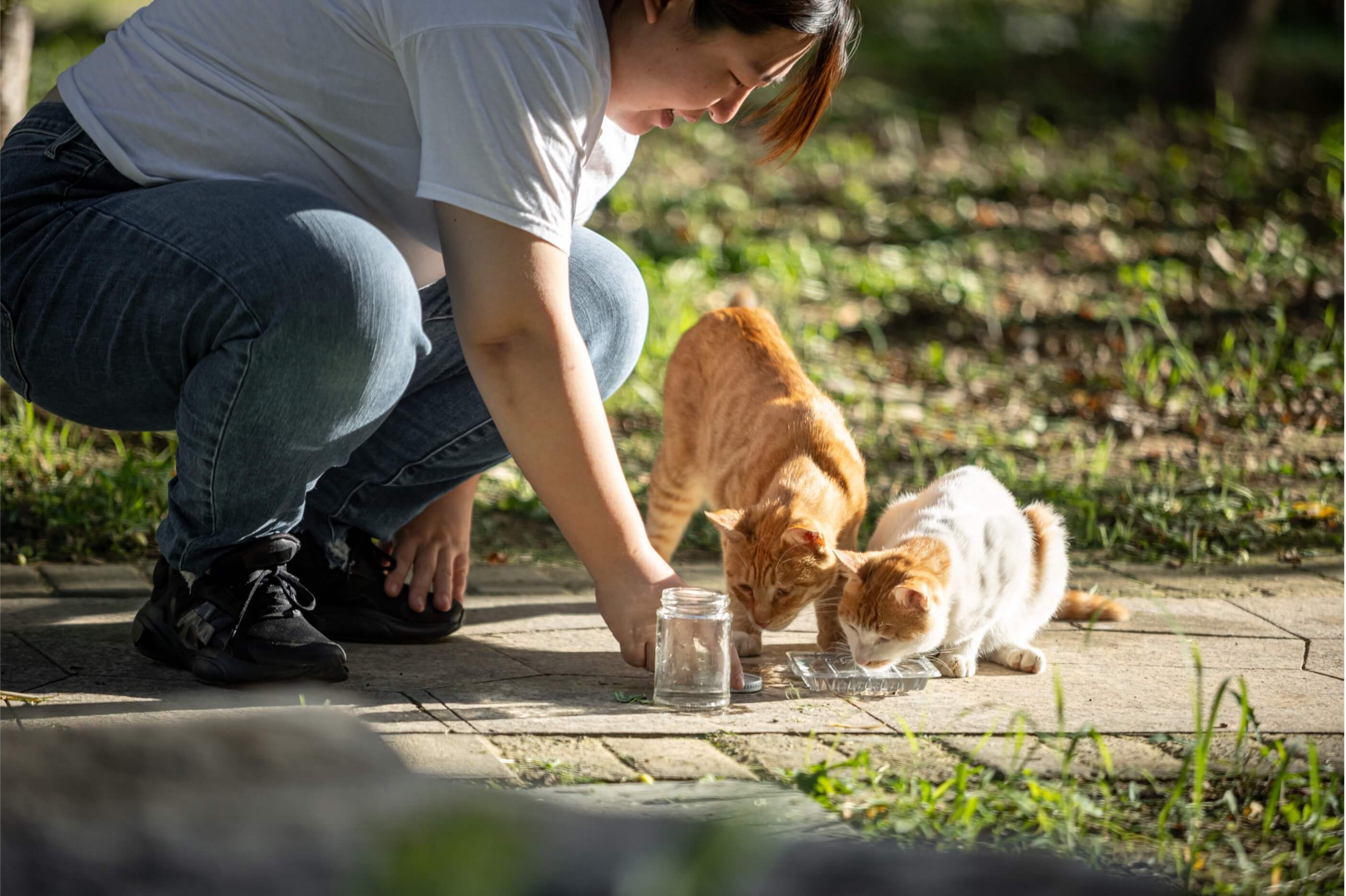
How can you help?
Donate to our programs or partners
Discover a range of programs working to address pet homelessness and learn how you can make a difference.
Be a responsible pet owner
Understand how to prepare for and care for a pet. Find out how you can help stray pets.
How can you help?
Donate to our programs or partners
Discover a range of programs working to address pet homelessness and learn how you can make a difference.
Be a responsible pet owner
Understand how to prepare for and care for a pet. Find out how you can help stray pets.
How can you help?
Donate to our programs or partners
Discover a range of programs working to address pet homelessness and learn how you can make a difference.
Be a responsible pet owner
Understand how to prepare for and care for a pet.